
Winter in Ukraine: Supporting communities through biting cold
Published: Apr 30, 2026 Reading time: 4 minutes Share: Share an articleLast winter was one of the hardest for Ukraine. Russian attacks on civilian energy infrastructure left hundreds of thousands of families without electricity, water, and heating. In freezing temperatures, this meant one thing—survival. With the support of the European Commission, we helped several frontline and border communities endure this period. We restored heating systems while also introducing more resilient energy solutions, so that even during the war people can access essential services and feel safe in their homes.
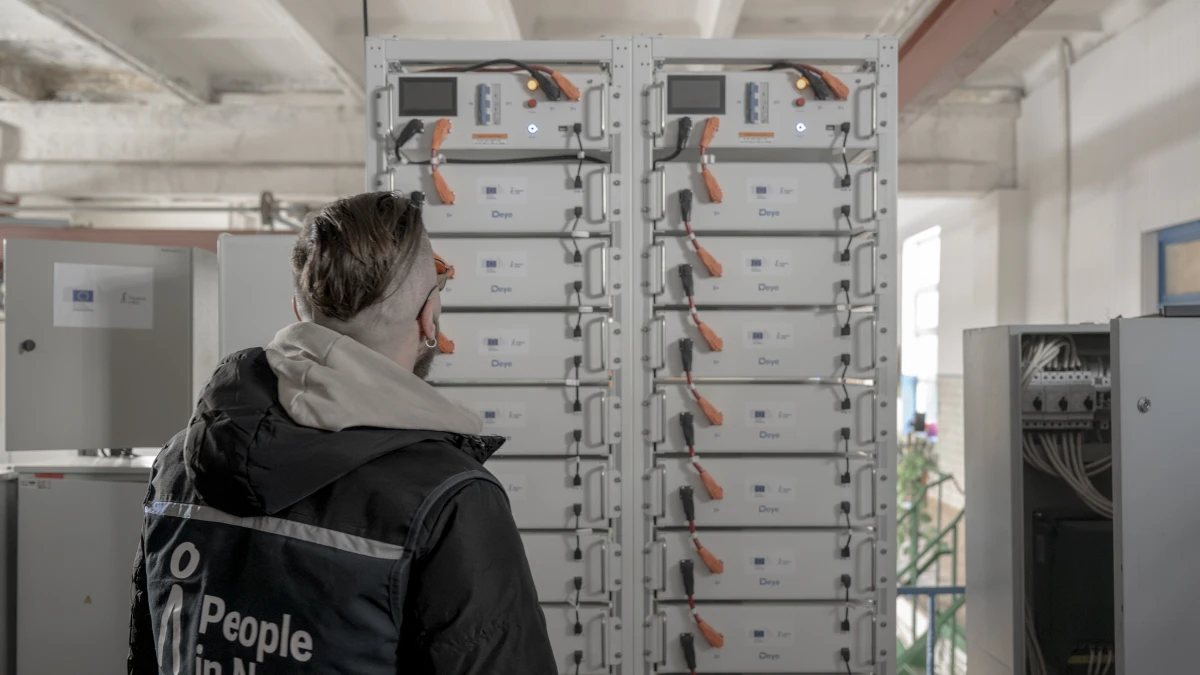
Our infrastructure recovery efforts support district heating systems and provide alternative energy sources for water utilities, and hospitals—places where interruptions can put lives at risk.
“In the context of regular attacks on energy infrastructure, access to heat, water, and electricity becomes a matter of basic safety and dignity. That is why we integrate renewable and backup energy sources to ensure the operation of water stations and other critical social institutions, as an immediate response to the country’s energy crisis,” says Tevfik Abdulmuhsin, WASH Technical Lead at People in Need (PIN).

We are undertaking work to support energy infrastructure in regions close to the frontline—Sumy and Dnipropetrovsk oblasts, as well as selected communities in Donetsk, Kharkiv, Kherson, and Mykolaiv oblasts.
Around 220,000 people live in Kamianske, Dnipropetrovsk Oblast. Like in many cities, electricity outages in winter often stop operations at district heating plants. Thanks to the equipment we delivered, heating is now restored much faster.
“We received pumps and frequency converters. Our equipment was outdated. The new pumps save electricity and equipment ensure a smooth start of the heating system without hydraulic shocks,” says Dmytro Valakh, Head of the Kamianske Municipal Heating Company.

Putyvl, Sumy Oblast, is located just 15 kilometres from the Russian border. Despite constant threats and shelling, around 20,000 still people live here. Power cuts caused by Russian attacks, have led to serious disruptions in the water supply. To rectify this problem, we installed a solar power plant—complete with battery storage.
“After the launch, we immediately saw the effect: during the day we operate on solar power; after sunset we run on batteries, which can supply electricity for another 4 to 6 hours,” says Kostiantyn Havrylchuk, Mayor of Putyvl.

We also equipped the local hospital and clinic with a solar power system. We replaced two solid fuel boilers and laid new heating pipelines. During power outages, the system powers the boiler house and also medical equipment, allowing doctors to continue saving lives.
“Our hospital provides specialised care to residents of two communities—Putyvl and Novoslobidske, about 25,000 people in total. We have both therapeutic and surgical departments, and thanks to the solar power plant we can operate autonomously during outages. Even when electricity is stable, it helps us save energy and cover part of our needs with our own generation,” says Iryna Hramatyk, Director of Putyvl City Hospital.
In Konotop, Sumy Oblast, we supported several critical infrastructure facilities. At one district heating plant serving thousands of residents, we installed new energy-efficient boilers that provide stable heating without breakdowns.
“The old boilers had been in use for over 50 years. They are inefficient and constantly operate in emergency mode. The new boilers will fully cover the needs of this neighbourhood. Gas savings will be around 25–30%, and we expect far fewer breakdowns,” says Taras Omelchenko, Director of the heating company.
Solar power systems were also installed at the water utility and the local hospital. Soon, a wind turbine will be added at the hospital to generate energy year-round.
“Without support—alternative energy sources, boilers, heating equipment, and partners like People in Need—our community simply could not cope with such limited resources,” says Liudmyla Hapieieva, Head of The Economic Department of the Konotop City Council.
Through these efforts, hospitals, schools, kindergartens, and water utilities continue operating even during prolonged power outages. Heating companies, with repaired systems and new equipment, have reduce fuel consumption and provide more stable services. However, it must be reiterated that international support is crucial, as communities often lack the resources to repair damaged infrastructure or conduct preventive maintenance before winter. Our efforts outlined above improve the lives of more than 160,000 people.

A warm home with running water, electricity in hospitals—these may seem basic. But that is because we often take them for granted. In Ukraine, their presence or absence determines whether people can stay in their homes or have to leave. Our work is helping frontline communities endure and preserve what matters most—the people who live there.


