
They dream of going to university, but war is stealing their childhood
Published: Jun 15, 2026 Reading time: 5 minutes Share: Share an articleWhat should a modern school be like? In Ukraine today, it is a safe and comfortable shelter where children can continue their studies during air raid alerts. Years of shelling, power cuts, and evacuations have taught Ukraine’s children an invaluable lesson—to cherish face-to-face interaction. With our support, school shelters in frontline regions are no longer just concrete boxes for waiting out danger. They are now modern underground classrooms teeming with life, where children feel safe enough to dream of the future.
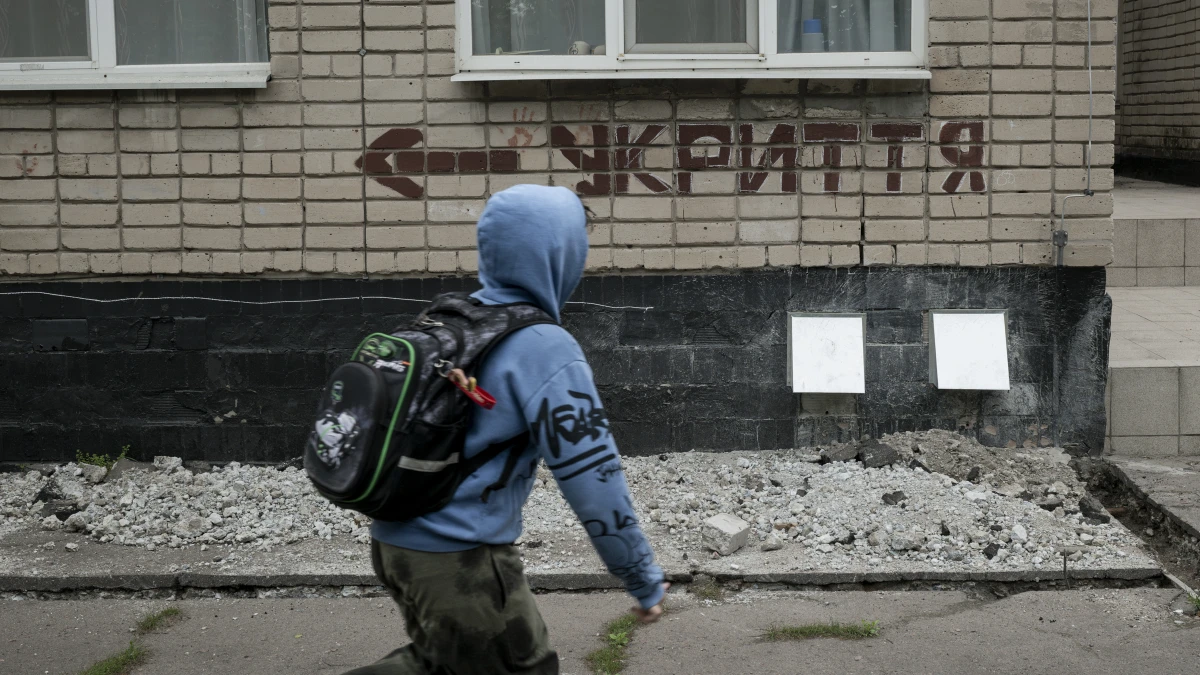
Valeriia is 15 years old. Russia’s full-scale invasion caught her in Year 5.
Ukrainian children hadn’t even had time to recover from the COVID-19 pandemic before they were back to online learning. Some classmates had moved abroad and others missed lessons due to air raid alerts and power cuts, so face-to-face interaction had almost completely disappeared.
Many children only managed to return to face-to-face learning in 2026. While some children are still studying remotely from abroad, most of the school’s pupils are once again able to interact in person, despite the shelling and danger.
“We’re interacting again, just like before the pandemic. Friendships in the class are being rebuilt. We have the biggest class in the school, and it’s the best,” says Valeriia.
She loves algebra, English, and computer science, and dreams of going to university. She’s considering options in Lviv, as it’s calmer there.

Dnipropetrovsk Oblast has been under constant attack since the beginning of the large-scale invasion. Since the beginning of 2026, the region has endured over 6,400 missile, guided bomb, and drone attacks. In order to enable children to study offline, Novomykolaivka Lyceum No. 2—the Verkhnodniprovsk Hromada's flagship institution—required a reliable shelter.
Just a year ago, the lyceum’s basement was a mere concrete room with no ventilation and only one toilet. Accommodating 200 children here at once was unsustainable. We have equipped the underground classrooms with proper lighting and air conditioning, new furniture, toilets, and a stairlift for children with special needs. When the siren sounds, the pupils go downstairs and continue their lessons.

“They’ve built a great shelter. I like everything here now—the toilets, the classrooms. We’ve got our own little room down there for lessons,” says Valeriia’s classmate Oleksandr.
He loves geography and computer strategy games, and dreams of becoming a game designer.

Oleksandr’s dad left to fight for Ukraine in the first weeks of the invasion. His mum often travels closer to the front line to see husband. So Oleksandr is very independent. He helps to look after his younger sister, Polina, who is in Year 1.
“Quite a few of my relatives have gone to the front, so we don't see each other much anymore. We call each other and hope to meet up. I’m older now, and it’s not so scary. But we’ve got used to it,” says Oleksandr.
There are quite a few children of defenders at the school. English teacher Yana Horbenko noticed that, after February 2022, many pupils became withdrawn and anxious.

“They’re constantly stressed, worrying about their loved ones. This is especially true of those whose parents are serving,” says Yana.
The school’s teachers have undergone training in psychosocial support, inclusive education, and referral procedures. This means they know how to identify children in crisis and where to refer them for professional support. Our psychologists are on-hand to provide counselling to both children and adults. In the classrooms, they create a space where children can talk about what troubles them.
“We can’t promise that everything will be fine, but we support and listen to the children,” says Yana.
The teachers note that psychosocial support is gradually yielding results. After years of isolation and anxiety, the children are learning to socialise and look out for one another again.
However, the return to in-person learning has exposed another issue: years of blended learning and relocations have left significant gaps in their education.
Karolina comes from a family of five. Her father has been fighting since 2014 and left again in 2022. He’s now home, and Karolina, a Year 7 pupil, has caught her breath and is now catching up on what she has missed.

“We’re trying to revise the Year 5 material so that we can study better in future,” says Karolina.
To help the children catch up, we have provided some of the school’s teachers with additional training to become tutors for our educational catch-up programme. They teach maths, English, and Ukrainian in a way that is different from normal lessons: there are no marks, the atmosphere is informal and interactive methods are used to help children learn without unnecessary stress.
“This programme has given us the opportunity to catch up on lost learning. This is confirmed by the test results and the children’s progress,” say the project tutors.

And now it's time for summer holidays, plans and dreams. Even when sirens shatter the silence and loved ones leave, often never to return, children remain children and believe that the best is yet to come.
Across five frontline regions of Ukraine — Dnipropetrovsk, Donetsk, Zaporizhzhia, Sumy and Kharkiv oblasts — People in Need, with support from the European Union, is helping children continue learning despite the challenges of war. Since the beginning of last year, more than 18,500 children gained access to safer learning environments through the refurbishment and equipping of shelters in 46 schools and educational facilities. At the same time, 3,200+ students took part in catch-up learning programmes to recover lost educational opportunities, while 202 teachers strengthened their skills through training in psychosocial support and inclusive education.
Together, these efforts are helping ensure that, even in the shadow of war, Ukrainian children can keep learning, stay connected to their peers, and continue imagining the future they deserve.


