
A dormitory in Kryvyi Rih. A place of warmth this winter
Published: Jan 13, 2026 Reading time: 3 minutes Share: Share an articleMany people in Ukraine have lost their homes because of the war and now live in collective centres. In Kryvyi Rih, one old university building, long in need of renovation has become home to several people displaced by the war. Before the cold weather set in, the windows in the communal areas were replaced and energy-efficient lighting was installed. This project was implemented by a local community organisation with the support of the European Union and People in Need. This is the first initiative of this kind that we have completed in the Dnipropetrovsk Oblast.
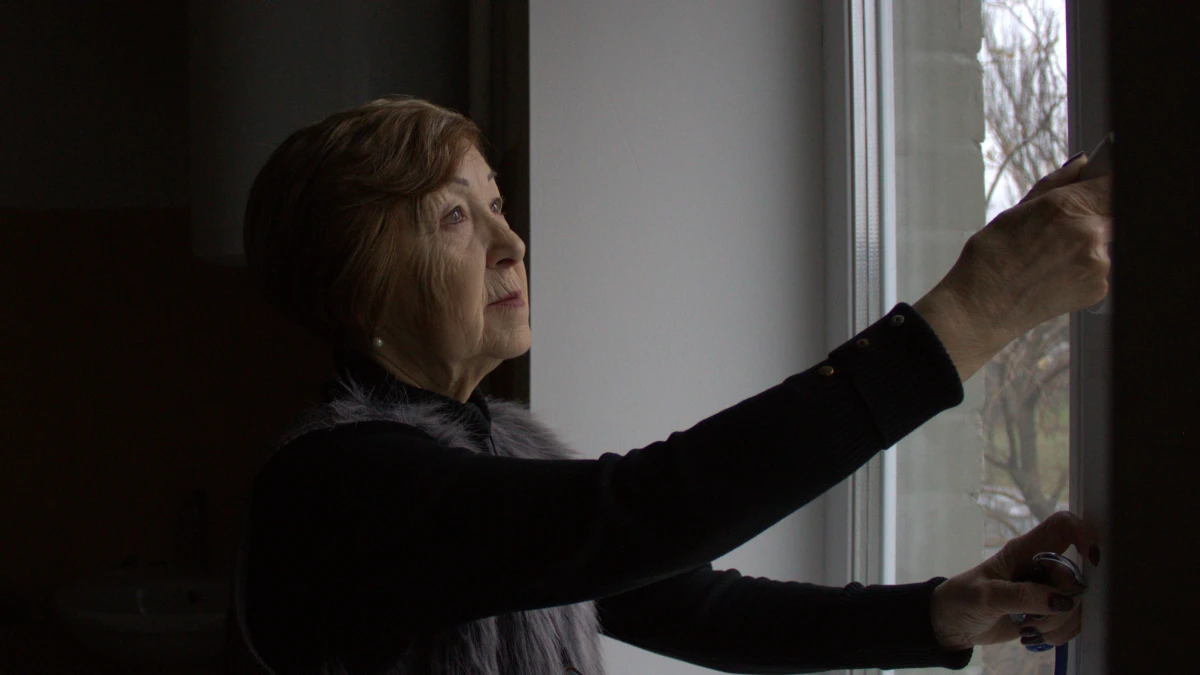
Inna Vasylivna, from the Luhansk Oblast, has been living in the dormitory since 2022. She cannot return to her hometown, Popasna, as it has been destroyed and is now occupied.

“To get documents for compensation for my destroyed home, I need to go to Popasna. But who will let me go? It's a one-way ticket. Besides, to get there, you have to take a detour through several countries, which costs a fortune,” she says.
Inna found a job in Kryvyi Rih. She admits that it wasn't easy; potential employers were concerned that she might quit at any moment to search for a better life elsewhere. So, Inna values her job as a cleaner and takes it very seriously. She says that the dormitory is generally liveable, but the building is old and the cold and prolonged power outages are particularly noticeable in winter.
Like Inna, Yana and her family are not from Kryvyi Rih. They came from Volnovakha in Donetsk Oblast. Yana's husband has found work in a factory and is doing all he can to take on extra shifts. This means that Yana has to take care of two young children and her 83-year-old bedridden mother alone. After the dormitory was shelled and most of the windows on most floors were broken, and Yana and her family had to move into one room.

As part of a pilot programme supporting community solutions for winter preparedness and sustainable recovery, we awarded grants of up to €5,000 to three community organisations in Dnipropetrovsk Oblast.
In collaboration with our partners from Ekodiya and Ekoklub, as well as local government representatives, we selected three organisations in Kryvyi Rih and Apostolove. Each organisation had its own focus: energy efficiency, renewable energy, and improving living conditions.

The Inhulets District Veterans Organisation used their grant to replace the windows in communal areas and install energy-efficient lighting with motion sensors in a dormitory in Kryvyi Rih, thereby improving living conditions.
“At first, people came and thought it would be temporary. After the evacuation, they didn't even unpack. But now that it has become clear that they will have to live here longer, they have started to care more about their living conditions. We chose this facility because many displaced people live here in close proximity, and everyone will immediately notice the difference,” explains Nina Zolotykh, Head of Inhulets District Veterans Organisation.
The new windows have improved insulation in the rooms and the new lighting has made them safer. Dormitory manager Tetiana Marenych says that both staff and residents noticed the difference immediately.
“Lighting with sensors is very convenient. When your hands are full, it's difficult to find the switch, but here the light turns on and off automatically. For a building like this, it's really about both savings and safety.”

For Inhulets District Veterans Organisation, this project was about more than just savings and construction work. Before it began, participants were taught how to prepare applications, plan implementations, and report to partners.
“It was not only financial support, but organisational support too. It greatly simplified our work,” says Nina Zolotykh.
Now, the residents worry less about surviving the winter cold. Through our collaboration, we have improved the lives of people who have lost their homes.


