
Keeping the heat in: helping older residents in Kharkiv Oblast win against winter
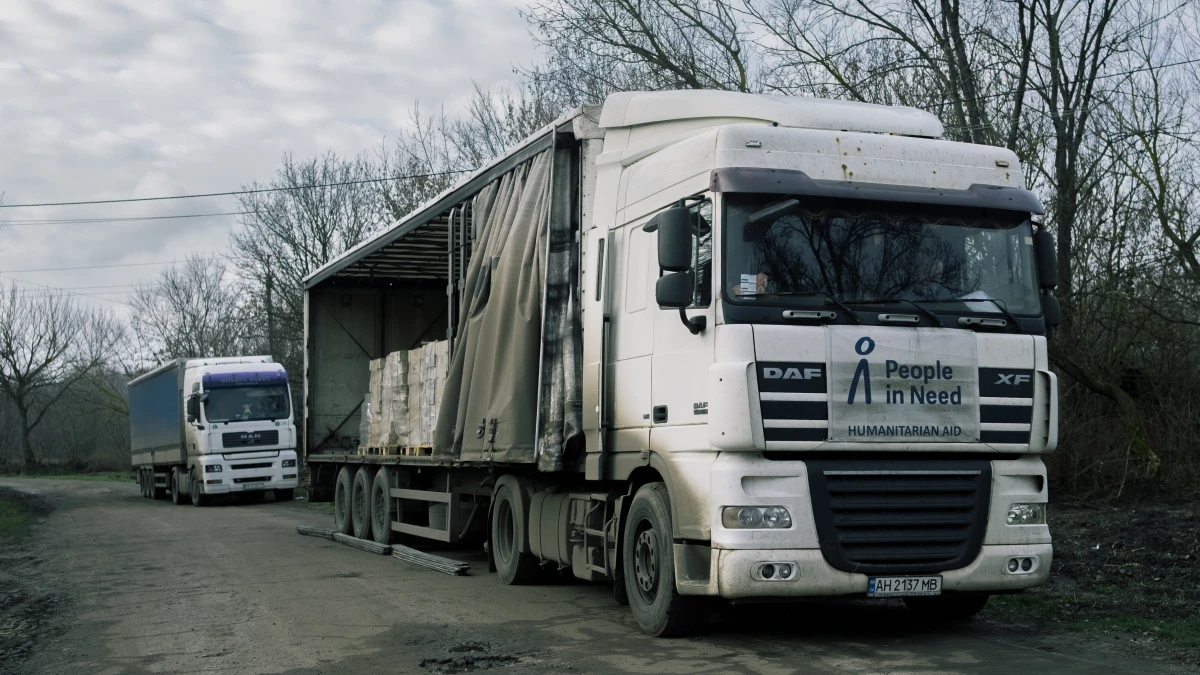
Published: Jan 22, 2026 Reading time: 3 minutes Share: Share an articleIn many villages in the Kharkiv Oblast, winter is all about staying warm. For elderly people and families living in houses with stove heating, every cold month means constant calculation: will there be enough fuel, or will they have to cut back on necessities again? It is to such families that we delivered fuel briquettes with the support of the Ukraine Humanitarian Fund.
Of the more than 800 people live in the Riabokonevo district, 150 of them are displaced persons. Moreover, most of the residents are elderly. Consequently, the workload for social workers is enormous, with each one responsible for up to 13 people.
“You know, they say that Europe is ageing rapidly. But our district is ageing even faster,” says Zinaida Miedviedieva, the district administrator.

There is little work here and pensions are miniscule. For many people, their only source of income is their land share, the money from which must be set aside for firewood.
“To heat a 50–60 square metre house, you need 15 cubic metres of firewood. That's three truckloads. According to current forestry prices, that would cost about 30,000 hryvnia (approximately €595). For a pensioner, such an amount is beyond the realms of possibility,” Zinaida explains.
Eighty-six-year-old Mariia's room resembles an art exhibition. Part of one wall is covered with pictures made from thousands of small jigsaw pieces. This was her hobby while she had the eyesight to do it. Now, due to illness, she hardly ever leaves her home.
“I can no longer walk,” she says. It's just a pity. My daughter is so busy with work, and I can't help her anymore,” Mariia says quietly.

Mariia has spent her life working exhausting jobs, such as working the fields on a collective farm and facing the hot furnaces of a brick factory. She and her husband built their house themselves. Their daughter Nataliia, a social worker, tries to keep it comfortable but she can only do so much. Given their challenges, the briquettes we delivered gave the family a great sense of relief.

In another part of the community lives Grandma Shura—as she is known to her neighbours. Oleksandra Pylypivna is 82. She remembers when she had the strength to take care of the cows and work long shifts at the brick factory. Now, however, she has little strength left and her fears have grown.
“I can hear the explosions. I am tormented by fear,” she admits.

She and her son stopped using gas four years ago—it was too expensive. Last autumn, they could only afford one truckload of firewood instead of two needed to get through the winter.
“What if it's not enough? What will we do?” This question kept Oleksandra awake at night.
When a truck carrying briquettes arrived in the village, she was initially confused.
“We've never heated with these before, so I'm a little scared...” she said, clutching the instructions in her hands.
For Oleksandra, these briquettes meant an end to the exhausting process of economising. She no longer has to choose between buying medicine and keeping the house at a comfortable temperature.

Preparing for winter is vital matter for Halyna Ivanivna and Ivan Petrovych Bilenko. They are used to being self-reliant; they built their house and tend to their farm themselves. However, the war and unpredictable power outages have made winter an uncertain time.

When we arrived with briquettes, Ivan Petrovych eagerly set to work, despite his age. While the briquettes were being unloaded, he stacked them in neat rows in the shed.
“Now we're not afraid of winter. You've really helped us out,” Halyna Ivanivna said encouragingly.

This winter, we provided fuel briquettes to 500 families in the Kharkiv Oblast with the support of the Ukraine Humanitarian Fund. Each family has their own stove, their own home, and their own fear of the cold. But this year, the warmth in their homes will last a little longer.


