
Inclusive education: Lessons from the Czech Republic and Ukraine
Published: Nov 28, 2026 Reading time: 5 minutes Share: Share an articleEnsuring that every child can learn, go to school, and develop was central to a meeting of Czech and Ukrainian education sector representatives in Prague.
The meeting was part of an initiative we are implementing in Ukraine with the support of the European Union. Representatives from the Ministry of Education and Science of Ukraine, the Ukrainian Institute for Educational Development, and our team visited Czech government institutions, schools, and civil society organisations implementing inclusive education. They discussed inclusive education reform, funding, support for teachers, and the quality of education.
The discussion began at the Czech Ministry of Education, Youth, and Sports. Our Czech colleagues explained how they had built a support system for children with special educational needs and how it is funded.

“At first, the system wasn’t very well managed and developed spontaneously. Schools that wanted to be inclusive took action, while others did not. Some projects were funded by the European Union. But there were no systematic rules at that time. These were introduced by a 2016 regulatory act: five categories of special educational needs and a system of support measures funded by the government.”– Michal Černý, Director of the Department of Preschool and Primary Education, Czech Ministry of Education, Youth, and Sports.
Over time, new questions arose: how to secure funding, maintain standards across all schools, and strike a balance between general and special education.
At the “Solidarita” school in Prague, students with different educational needs learn in the same classroom.
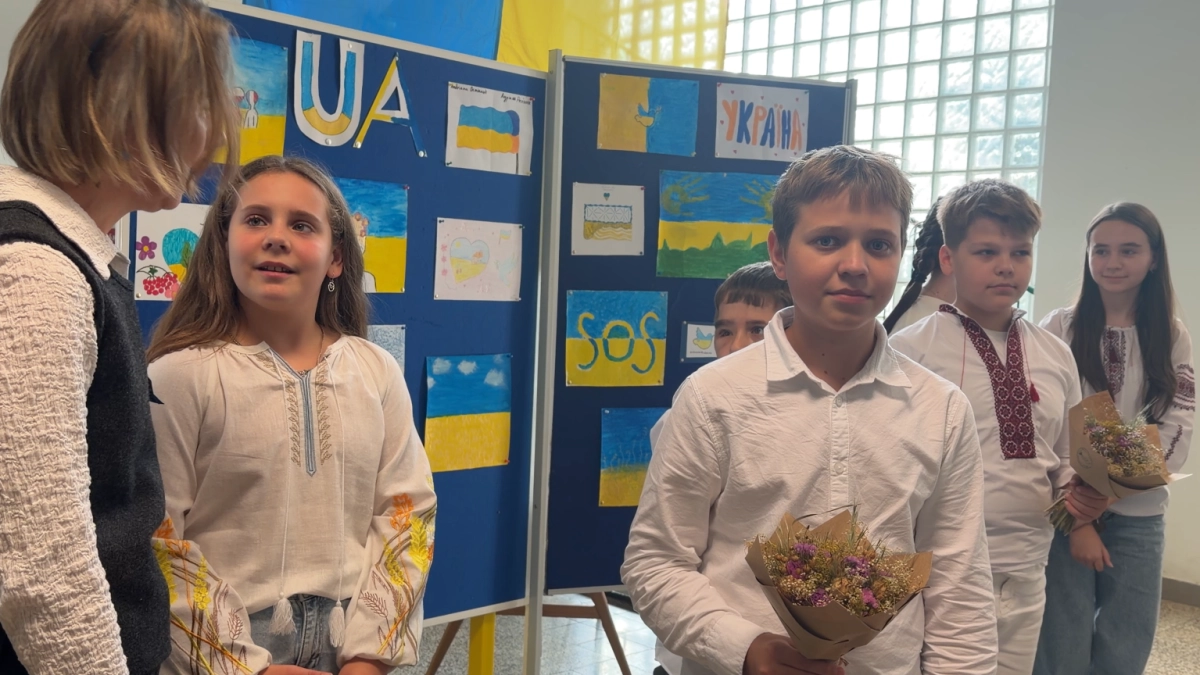
At the school entrance, the delegation was greeted by Ukrainian children who had arrived in the Czech Republic in 2022. They are now following the Czech curriculum alongside their local classmates. Ihnat began speaking Czech within seven months, and Ivan mastered the language just as quickly. Czech schools provide support for students with special educational needs and for those facing a language barrier—such as Ukrainian-speaking students arriving in the Czech Republic.
For a school to provide a child with the right support, it must identify the child’s educational needs in a timely manner. In the Czech Republic, this is handled by counselling centres. The Ukrainian delegation visited one of them and adopted practices that could be useful for inclusive resource centres in Ukraine.
Access to school is just the beginning. It is essential that a child with special educational needs actually learns, can master the curriculum, and socialises effectively. These issues were the focus of a discussion with the Czech school inspectorate. The inspectors explained the evaluation criteria and the gradual nature of the reforms.
The meeting revealed that the number of children with special educational needs in general education schools and the resources available to support them are only part of the picture. They noted that it is equally important to know whether a child is making progress in their studies, participating in school life, getting along with classmates, and feeling at home at school.

“Ukraine is developing inclusive education despite the extraordinary challenges posed by the war. This exchange provided an opportunity not only to learn about Czech approaches but also to share our own experiences and discuss challenges common to both education systems. The most important thing is how to turn these discussions into practical solutions for children, teachers, and schools.” – Olha Rybak, Head of the Department of Inclusive and Special Education at the Ministry of Education and Science of Ukraine.
A teacher cannot single-handedly provide high-quality support to all students in their classroom. That is why, at the National Pedagogical Institute of the Czech Republic, the delegation discussed how to train and support teachers and teaching assistants.
Our Czech colleagues presented practical resources, including “Ten Principles of Successful Practice in Heterogeneous Classrooms,” and emphasised that support does not end with training. Teachers need accessible resources, professional communities, and practical advice.

“The visit to Prague proved extremely useful not only in terms of studying the Czech experience in implementing inclusive education, but also for a thorough analysis of the existing education system in Ukraine and ensuring equal access to educational services for every child, regardless of their status or characteristics of psychophysical development. The Czech experience demonstrates the importance of systematic preparation for change. First and foremost, the implementation of professional training for all teachers and teaching assistants, ensuring they receive adequate methodological support; and, on an ongoing basis, keeping parents and society at large informed about the value of inclusive education.” – Marharita Chaika, Education Expert at People in Need.
The visit underscored the importance of supporting existing state programmes for inclusive education in Ukraine. To this end, we are working with children and educators today while simultaneously helping to strengthen the system that will underpin education tomorrow.
What we do:
- During the 2025–2026 school year, our team completed renovation work and provided equipment for temporary learning spaces at 24 educational institutions, helping more than 10,000 students;
- We are improving the infrastructure of educational institutions and inclusive resource centres, and making learning spaces accessible;
- We trained 155 teachers in continuing the educational catch-up programme in the Dnipropetrovsk, Zaporizhzhia, Donetsk, Kharkiv, and Sumy oblasts;
- We support the development of inclusive education in our current educational projects as well, training and employment of teaching assistants in the programme to make up for lost learning;
- We are helping to establish close cooperation between inclusive resource centres and schools to support the process of comprehensive assessment by the centres’ specialists;
- Together with the Ministry of Education and Science of Ukraine and the Ukrainian Institute for Educational Development, we are planning joint initiatives to ensure that teachers and teaching assistants receive thorough methodological support.
“Inclusive education is not simply about opening classroom doors. It is about making sure that every child has the support and opportunities they need to learn and develop. What made this exchange particularly valuable was the opportunity to bring together Ukrainian and Czech experience. Ukraine has much to share about adapting education during war, while the Czech Republic offers important perspectives from its own reforms. By connecting these experiences, we can contribute to more inclusive and resilient education systems.” – Olena Budagovska, Advocacy and Communications Director, People in Need Ukraine.


