
Dreams, pain, and war: Psychosocial support in Ukraine
Published: Dec 1, 2025 Reading time: 5 minutes Share: Share an articleAs the war enters another year, millions of Ukrainians continue to live with fear, uncertainty, and the emotional consequences of violence and displacement. While material aid, repairs and reconstruction remain essential, the need for psychosocial help has grown quietly but dramatically.
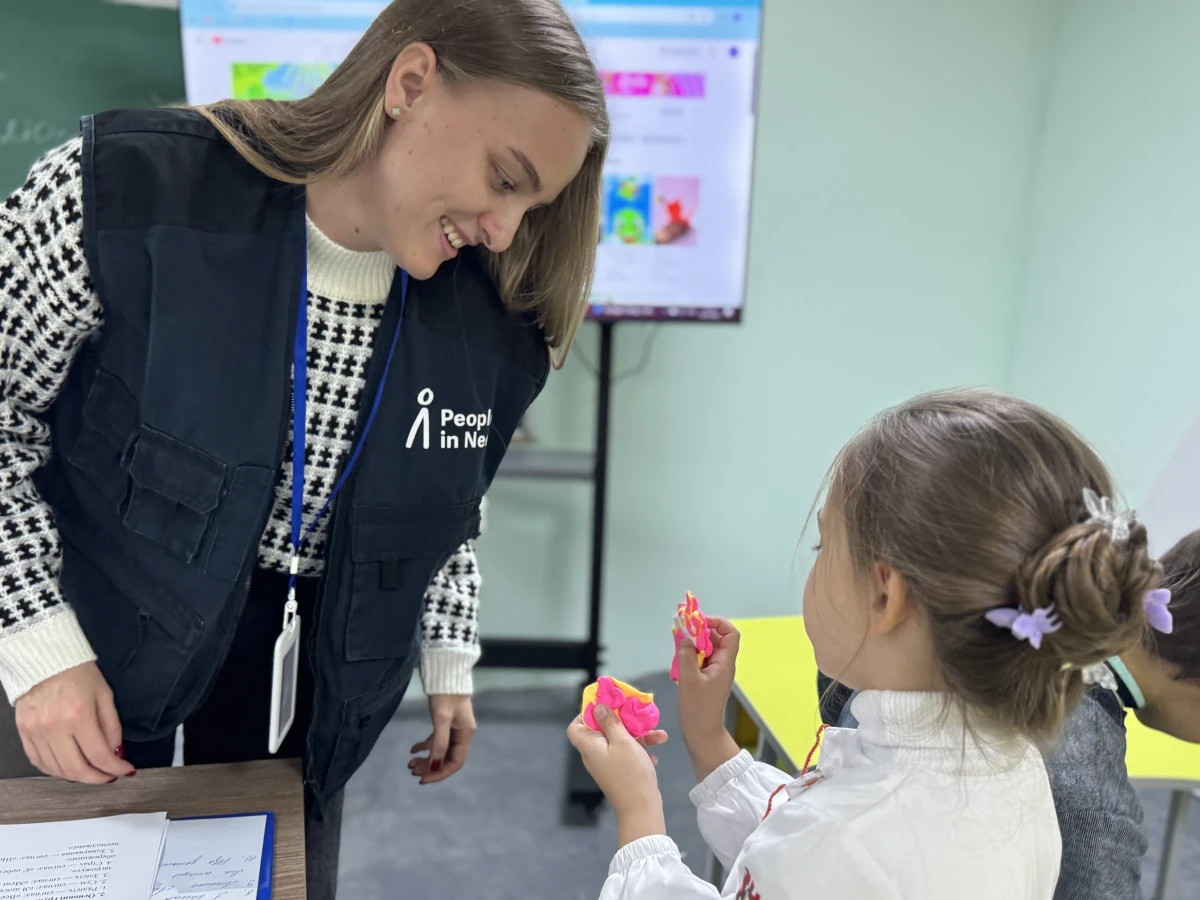
Through two main pillars we provide this support to Ukrainians who need it. The first is a nationwide 24/7 psychosocial support hotline, staffed entirely by trained Ukrainian psychologists. The second is a network of mobile psychosocial support teams working directly in communities—in schools, collective centres, shelters, and towns close to the frontline. Together, these services form a system that helps people cope with the invisible wounds of war: anxiety, fear, sleeplessness, grief, burnout and isolation.
Since 2022, we have provided free-of-charge psychosocial services to over 128,000 adults and children—and supported local partners to reach a further 43,000 people.
Listening when silence becomes unbearable
"Hello! My name is Victoriia, how can I help you?" —this is how psychologists at our hotline usually begin their conversations. Every day, they listen to and support dozens of people who feel they can no longer cope—when anxiety, fear, and despair become overwhelming.
"We get a lot of calls during shelling or power cuts. People are often confused and don’t know what to do. They call to share their experiences. Many report panic attacks or similar symptoms. Uncertainty about tomorrow and complicated family relationships are also common reasons to seek help," says Victoriia.

Our psychosocial support hotline has operated since 2015. After the full-scale invasion, it became a lifeline for people who suddenly had nowhere else to turn. Qualified psychologists, trained in hotline work and evidence-based protocols and methodologies, are available 24/7, free of charge, to anyone in Ukraine.
In 2024 alone, they received more than 25,000 calls — with around 60 a day and about 40 at night.
Real stories from the hotline
Some callers have been known to call the hotline over a number of years as they navigate the long road through traumatic experiences/event. For others, a single conversation has changed the course of their life.
In one case, a 47-year-old woman from Mariupol described how she survived in a basement and buried her dead neighbours during the occupation. Although she has since found work, she still feels “stuck in a suspended reality.” The hotline helped her stabilise and prepare for long-term therapy.
In another case, a 13-year-old boy called after being mocked by his classmates, unsure where friendship ends and bullying begins.
"After the psychologist asked me what ‘friends’ mean to me, I realised I might be a ‘doormat.’ I know I don’t need to be liked by everyone—I’m a nerd, a geek, someone people don’t usually befriend. So, when people like me find someone who talks to us, we cling to them. Now I understand I can stop lying to myself—”kindergarten” is probably over," he said.
These are not isolated cases. They reflect the emotional landscape that hotline psychologists navigate every day.
"The hotline is often the only available assistance for people in the most vulnerable situations. Around 30% of callers each month are people with disabilities. Young people, children, older adults, people in panic or distress, survivors of violence, and those with suicidal thoughts also call. And no matter the time of day or season, they always receive qualified support," says Anna Kozina, MHPSS Manager at PIN.

Support that travels where it is needed most
Alongside the hotline, we operate mobile psychosocial support teams in nine oblasts. These teams provide individual counselling, group sessions, psychological first aid, and structured activities aimed at reducing stress and restoring a sense of safety. They support people in displacement centres, frontline villages, schools, and community hubs where services are otherwise limited.
"We work in Donetsk Oblast. There is currently high demand for individual consultations, especially from recently evacuated people. They need help in calming down. Many don’t know where to go or what to do next. We help them stabilise," says Svitlana Khrustenko, Mobile Team Psychologist.

Children make up a significant part of the work of the mobile teams. Many struggle with anxiety, concentration difficulties, behavioural changes, and fear linked to shelling and displacement. Specialists conduct group activities that help children express their emotions, rebuild peer connections, and regain a sense of normal life. School teachers receive guidance on responding to trauma-related behaviours in the classroom, and parents learn techniques to support children showing signs of distress.
In the past two years, mobile teams have delivered more than 7,000 consultations and trained over 4,000 teachers, social workers, medical staff and local responders—strengthening communities’ ability to support their residents and reduce long-term psychological harm.
Demand is rising
Often, psychological wounds remain invisible until they start affecting a person’s ability to work, study, raise children, or maintain relationships. Without support, anxiety escalates into panic, fear into isolation, and exhaustion into collapse. This makes psychosocial assistance essential not only for personal wellbeing but also for Ukraine’s social and economic recovery.
"Timely psychosocial support helps people build resilience, develop effective coping strategies, adapt to new circumstances, and become more socially and economically active. We have many success stories—people who, after receiving support, applied for grants, started businesses or found jobs. Psychosocial support not only saves lives but helps people live fully, even in wartime," says Anna Kozina.

Economic analyses suggest that every dollar invested in community-based psychosocial support can generate between fifteen to twenty dollars in GDP impact. And the need is expected to continue rising.
"We plan to strengthen local organisations and specialists, integrate PSS into other sectors—including economic empowerment and education for children and youth—and expand services to more social groups, including veterans and their families," says Kateryna Kryklyva, Protection Technical Lead at PIN.
Same dreams. Same pains. But with a war on top
The stories shared on the hotline—fear for children, grief for parents, relationship breakdowns, bullying at school, burnout, uncertainty, loneliness—are universal human stories. These are struggles familiar everywhere in the world.
The difference is that Ukrainians live through these challenges with a war layered on top. Under constant stress and uncertainty, emotional wounds deepen: anxiety, depression, and exhaustion have become part of daily life.
Our hotline and mobile teams ensure that no one has to face this reality alone.


