
A second wind: How Ukrainian veterans and their families transition from service to business
Published: Aug 3, 2026 Reading time: 7 minutes Share: Share an articleA restoration workshop. Board games that teach children history. Food production. Each of these is a business in Ukraine today where a veteran or the family of a fallen defender have found a way to begin life anew. But starting a business isn't easy: it requires knowledge and financial resources. That's why, together with Lviv City Council and with the support of the Czech people, we implemented the Courage to Business programme. This programme helped veterans and their family members learn entrepreneurship and receive grants to develop their businesses. Today these businesses are already contributing to the country's recovery.
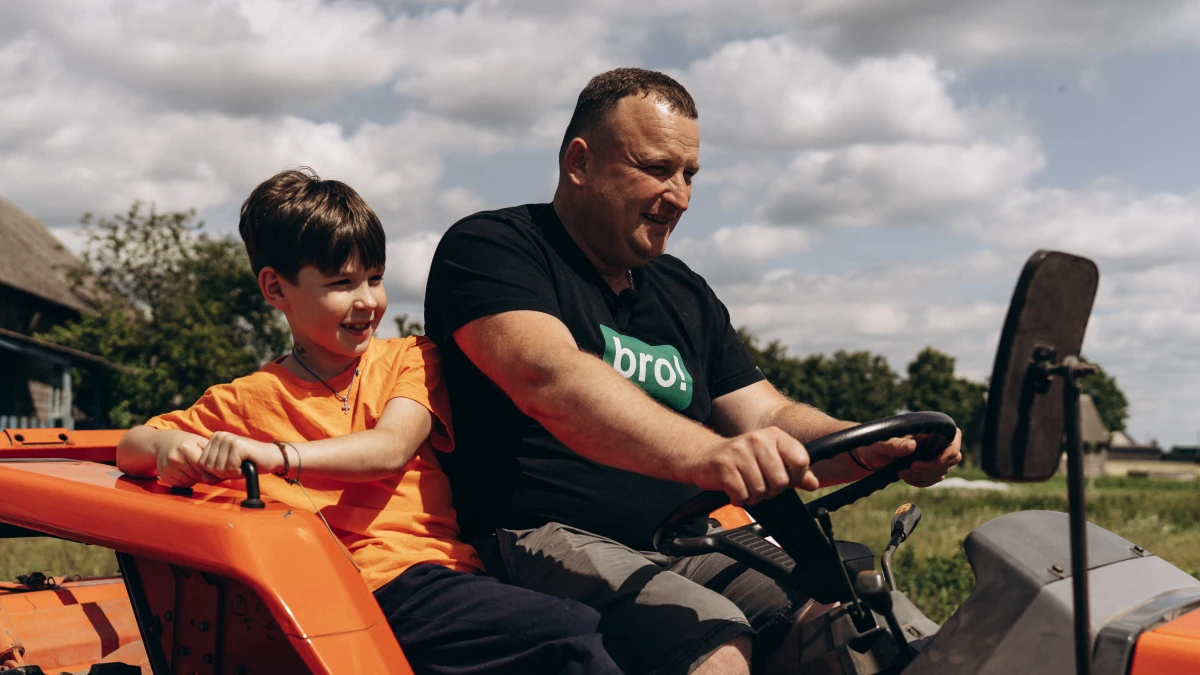
Before the war, Viktor Permiakov was building a tourism business in Lviv. The day before the full-scale invasion, he returned home from a trip abroad with his family, and the very next morning, together with thousands of other volunteers, he was queuing at the military recruitment office.
Viktor spent 27 months at the front. After being wounded and undergoing surgery, Viktor followed a set diet and ate quail eggs and meat. He came to like these so much that he decided to open his own quail farm—in the village in Volyn Oblast where he was born and raised.
"I decided to create something that could be useful to people. But I had no experience raising quails. I took part in the 'Courage to Business' programme. The people who help veterans with their adaptation gave me a level of trust that motivated my next steps," Viktor says, adding: "This transition to civilian life is very hard. It's much harder than it seems."

Viktor's family became his support.
"My wife is my biggest critic, my partner, my competitor and my advisor," he shares.
Viktor already had a plot of land, a farm building and enormous motivation. But every process had to be set up from scratch. Soon the farm grew from a thousand quails to six thousand birds. Demand for the products is growing. Viktor has hired four employees, is renovating and purchasing equipment. He wants to sell not only eggs and meat, but also process them into various delicacies.
"Scaling up requires a lot of money. All the grant programmes and even loans cover the purchase of equipment, but they don't cover things like construction. There's also a problem with suppliers. Sometimes everything moves very slowly."

Quality and environmental friendliness—these are the standards Viktor holds his business to. Every egg is carefully checked before it's placed in the box.
"Our boxes say this is a business founded by a war veteran. It's like a marker. You simply can't do a bad job—you have to do your best. I'd recommend buying something from a veteran-owned business, because besides soul, character and persistence, there's also a huge amount of will to live, to work, and a lot of love put into it."
Viktor’s experience reflects a broader reality faced by many veterans rebuilding their civilian lives. While training, mentoring and grants provide a vital starting point, long-term success also depends on access to finance, business networks, markets and communities that recognise veterans’ contribution.
That is why we are expanding our support beyond individual businesses to strengthen the wider ecosystem for veteran entrepreneurship. Together with municipalities, veteran organisations and private sector partners, we are helping build stronger business networks, improve access to markets and finance, and create opportunities that continue long after individual projects end.
As Ukraine’s veteran population continues to grow, sustained investment will be essential to scale these efforts. Investing not only in veteran entrepreneurs but also in the systems that support them will help create resilient businesses, generate employment, strengthen local economies and accelerate Ukraine’s long-term recovery.
When Oksana Dubyk and her father were hastily leaving Mariupol, her husband, Ihor, was fighting for their hometown. Ihor was serving with the National Guard of Ukrain, when he wounded and evacuated to the hospital at the Azovstal plant. From there, in May 2022, together with other Ukrainian defenders, he was taken prisoner and spent 200 days in captivity. As soon as Oksana heard the long-awaited words on the phone, "I'm home," she immediately began making her husband's favourite Napoleon cake.
"At the time, I had nowhere to bake a cake. But I found a way to make the cream, my mother-in-law baked the layers. We spread them with filling overnight. And I took it to him when he came back from captivity. He came back weighing about 44 kg, down from anormal weight of 75 kg," Oksana recalls.

Her husband could have chosen not to return to the army—he was already 60. But a few months after rehabilitation, Ihor went back to the front. He was killed during a combat mission. And then Oksana decided to make his dream come true.
"When Ihor was held captive, he must have thought a great deal about what he would do once the war was over. And when he returned, one of the first things he said was, 'Oksana, we're going to have a bakery.'"

Their family kitchen often smelled of baking. Oksana knows how to cook and loves it, but running an entire bakery was a challenge. She had to learn professional culinary skills, and thanks to the "Courage to Business" programme, she mastered the arts of entrepreneurship.
"I knew how to work with people and numbers. I also know how to plan, because I'm a civil engineer. But I didn't have much experience specifically in entrepreneurship, even though back in Mariupol we had our own joinery workshop. During the training, we had a great team of mentors. All the programme participants are very sincere people."
With the grant, Oksana purchased equipment. Her bakery in the village of Porshna, Lviv Oblast, operates with no days off. Although she has hired two people, she still can't find time to rest, because demand for her goods grows every day. Her range includes several types of bread, pastries with various fillings, pizza, and, of course, her husband's favourite cake.
Viktor and Oksana are just two of hundreds of veterans and their families who have had to rebuild their lives and their businesses lives from scratch. To make sure that Ukrainians who wanted to be active in rebuilding their economy, we created the Courage to Business programme—a suite of comprehensive support that combines training, mentorship, psychosocial assistance and grants: up to $5,000 from People in Need, and around $2,000 from Lviv City Council. In total, the programme has served 200 veterans and their family members, of whom 100 received grants for their own business.
"The essence of this project is about supporting and strengthening the economy of communities and of Ukraine. It's about creating new jobs and new opportunities. But most importantly, veterans find new meaning in their work, a push to keep moving forward. They're ready for new discoveries about themselves, and that's very important," says Oksana Bohdan, Senior Area Manager at People in Need.

"The most valuable indicator of the project's success is when participants say it wasn't 'just about the money.' We created support that combines funding, knowledge, community and long-term opportunities for growth. Veteran-owned businesses have great potential when it comes to Ukraine's recovery," adds Anton Chepurko, Economic & Green Recovery Expert at People in Need.
Even after the programme ends, veterans and their families remain in touch, give each other business advice, and recommend suppliers. Recognising the role this community plays in Ukraine's recovery, we launched a new area of support for veterans and their family members in Dnipropetrovsk and Lviv oblasts—it combines entrepreneurship training with mental health services. We also continued the grant programme for micro and small businesses led by veterans in five oblasts: Lviv, Kharkiv, Dnipropetrovsk, Mykolaiv and Kherson.

"Most veterans start business because they're trying to restart their lives. This programme gave us the confidence that we can do it. You feel that someone needs you, that someone besides your fellow soldiers is supporting you, to help you get back on your feet," says programme participant Andrii Mochurad.


